
Gardener Regents Park Recycling & Sustainability
Welcome to the sustainability outline for the Gardener Regents Park and surrounding green spaces. This page describes how the Gardener, Regents Park team organises an eco-friendly waste disposal area and a dedicated sustainable rubbish gardening area that supports biodiversity, reduces landfill, and increases reuse across the park.The plan balances everyday operational needs with long-term environmental goals. It explains the approach to on-site separation, composting of green garden waste, redistribution of usable materials, and logistics such as low-carbon vans for collection. Together these measures form a local circular approach for waste handling around Regent's Park and adjacent boroughs.
- Garden waste separation and on-site composting to return nutrients to soil
- Dry recycling streams for paper, cardboard, glass and rigid plastics in accordance with borough separation schemes
- Food waste collection from community events and offices for local anaerobic digestion
- Bulky plant waste reuse or transfer to partners for mulching and landscape reuse

Eco-friendly Waste Disposal Area: Design and Function
The designated waste disposal area is compact, discrete and sited to minimise disturbance to park users and wildlife. The space uses visual screening and permeable surfacing, with clear signage for each stream: compost, green waste, dry recyclables and reuse items. Zones are colour coded to reflect local borough collection systems so materials match council expectations for onward processing.Our approach aligns with neighbouring boroughs' waste separation policies. Where the local council provides a three- or four-stream collection, the park's sorting replicates that model so transfer to municipal services is seamless. This helps achieve higher capture rates for recyclables and reduces contamination of streams destined for recycling facilities.
The Gardener at Regents Park also operates a small quality-control station where staff inspect loads before transfer. Quality over quantity ensures recyclable materials stay clean and reusable items are diverted to partner charities rather than being lost to landfill.
Low-carbon transport is central to making the operation sustainable. The fleet uses low-carbon vans including electric and hybrid vehicles for short runs inside the park and to nearby transfer hubs. These vehicles significantly reduce emissions from collections compared to diesel alternatives and fit the carbon reduction targets for urban green-space management.
 Logistics routes are optimised to reduce mileage: multiple pick-ups are batched and scheduled to coincide with council collection windows and charity drop-offs. The Regents Park gardener team coordinates with borough waste teams to avoid duplicate trips and to use low-emission corridors where possible.
Transport partners are audited for emissions and fuel type. Where electric charging is used, it is supplied from renewable sources where possible to keep lifecycle emissions low. The small fleet model keeps operational costs down and demonstrates that green transport can be scaled for park operations.
Local Transfer Stations and Material Flows
Materials that cannot be processed on-site are taken to local transfer stations and eco-parks. These facilities accept segregated green waste, mixed recyclables and materials for energy recovery or mechanical sorting. Coordination with borough transfer stations ensures materials move into the correct treatment stream quickly.The park team maintains relationships with nearby transfer hubs that serve central London boroughs, ensuring continuity between the park's collection standards and the infrastructure at municipal facilities. This localised network reduces transport distances and improves the chance that items are recycled or repurposed.
Partnerships extend to specialist processors for items such as wood, textiles and plant pots. Where possible, the Gardener Regents Park routes materials to facilities that produce compost, mulch or recycled materials to be used again in the city's green infrastructure.
Partnerships with charities and social enterprises are a cornerstone of the reuse strategy. Unwanted but functional items—tools, planters, and surplus materials—are cleaned and assessed, then transferred to charity partners for community projects and training programmes. This increases reuse rates and supports local social value initiatives.
Key collaborators include community gardens, local reuse centres and seasonal charities that accept usable horticultural kit. The Gardener, Regents Park works with these groups to host collection days and bulk donations, ensuring that materials given a second life directly benefit local people and projects rather than being incinerated.
Monitoring and targets: the team has set a recycling percentage target of 70% diversion from landfill by 2030. Progress is tracked monthly using simple weight and volume metrics for each stream. Trend data helps refine separation practices and routing so the operation can meet and exceed municipal benchmarks.
 Community engagement underpins success. Volunteers, seasonal gardeners and staff receive training on correct sorting and contamination avoidance. Regular briefings and visual aids help everyone follow the boroughs' approach to waste separation, whether that means dry mixed recycling, separate glass banks or food waste collections.
The Regents Park gardener programme encourages reuse through swap events and seedling exchanges that repurpose containers and materials. By promoting small-scale reuse at the park level we reduce demand for new resources and demonstrate practical circular economy principles in an urban setting.
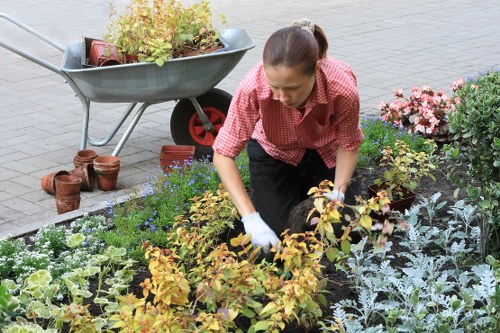 The future for Gardener Regents Park lies in continuous improvement: more on-site composting capacity, expanded charity partnerships, and a progressively electrified fleet. The sustainable rubbish gardening area and eco-friendly waste disposal area are evolving examples of how urban greenspaces can lead in waste reduction, reuse and low-carbon operations while supporting community well-being.